
Boosting Student Emotional Well-Being by Rethinking and Reducing Unstructured Time
This article is part of the series, “Designing Middle Schools for a New Generation: What Central Office Leaders Need to Know,” which shares what central office leaders need to know to build on the strengths of the traditional middle school model to rethink how schools can better support a new generation of young adolescents. Across five posts, we share actionable, research-backed, system-level strategies school and district leaders can implement, strengthening core instruction, broadening opportunities for students, and using time and resources more strategically to boost learning and engagement over the long term.
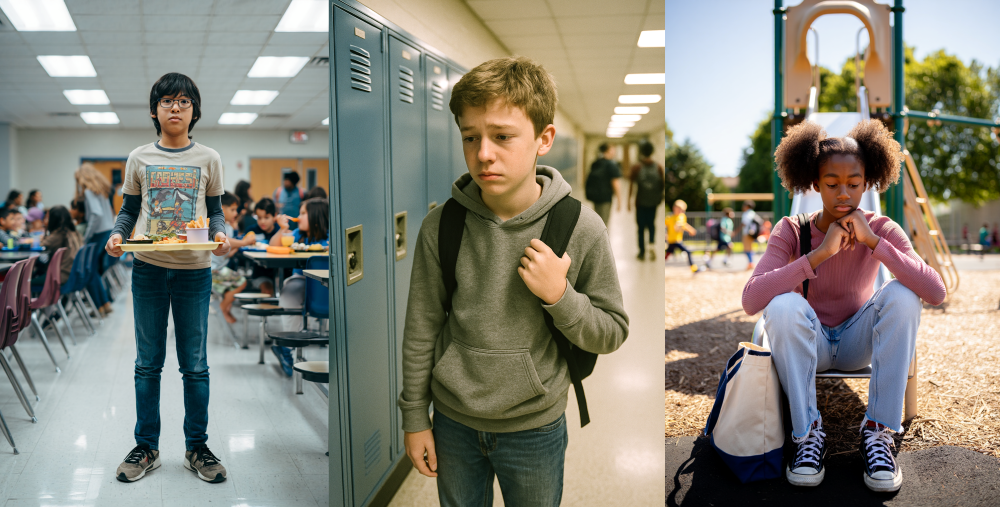
Ask middle school students when they feel most anxious during the day, and the answer is rarely “during social studies class” or “while working on a science lab.” More often, it’s lunch. Transitions. Arrival. Recess. Advisory. These are moments when expectations are the most unclear, adults are least visible, and social dynamics feel hardest to navigate.
In fact, for many young adolescents, unstructured time is the most stressful part of the day—not just at school, but in life. Middle school is already a period marked by heightened emotions and social uncertainty. Many middle schools struggle to help students navigate these challenging years, yet paradoxically, also implement structures that make a student’s experience in school even more stressful.
If emotional well-being is foundational to learning—and it is—then how schools design the day, including unstructured time, matters enormously.
Why Unstructured Time Hits Middle Schoolers Especially Hard
Young adolescents are still developing the skills needed to manage open-ended social environments. They are learning how to read social cues, regulate impulses, navigate peer conflict, and handle exclusion—all while experiencing significant biological and emotional changes.
Unstructured school time often amplifies these challenges. Common examples include:
Loosely supervised arrival or dismissal time
Long lunch or recess periods with few clear routines or expectations
Extended passing periods where students have the opportunity to wander or linger
Under-planned advisory blocks
“Flex” or study hall periods without a well-defined purpose
These are often the times of day students dread most—and the times when many schools see the highest volume of discipline incidents. For students already feeling anxious, isolated, or dysregulated, these moments can feel overwhelming.
Two System-Level Strategies to Strengthen Student Emotional Well-Being
Boosting emotional well-being does not require layering on new programs. It requires intentional, system-level design choices that increase predictability and reduce stress. Teachers and students alike thrive on structure and clear expectations.
1. Reduce or Remove Unstructured Time Wherever Possible
One of the most effective ways to support student well-being is simply to reduce the amount of time students spend in loosely defined environments. In addition to improving school culture, such changes support the goals of protecting academic time and keeping teachers focused on instruction rather than on duties.
If any unstructured time cannot be exceptionally well managed and organized, it should be removed from the schedule and the time given back to instructional periods. This can include:
Eliminating AM or PM homeroom blocks that lack a clear purpose
Replacing poorly functioning flex or study hall periods with structured classes or interventions
Shortening passing periods
Streamlining lunch schedules to avoid long, unsupervised stretches
Schools that make these adjustments often see immediate benefits—fewer behavior issues, smoother transitions, and a calmer overall tone to the day. When expectations are clear and routines are consistent, students are at their best.
2. Add a High Level of Structure to the Time That Remains
Some unstructured time is unavoidable—and healthy—when it is intentionally designed. The key is to treat these parts of the day with the same level of planning and care as instructional time. Effective strategies include:
Visible Adult Presence During Transitions: Setting the expectation that teachers are at their classroom doors or in hallways during passing periods dramatically improves student behavior and reduces anxiety.
Structured Lunch and Recess Routines: For example, students transition to recess as soon as they are finished eating lunch, and recess includes optional organized games or activities rather than a free-for-all.
Purposeful Advisory: Advisory works best when it has a clear focus—relationship-building, check-ins, or skill development—rather than functioning as unstructured downtime that is unfairly left up to teachers to figure out.
When students know where to go, what to do, and who is there to support them, they can focus more on learning and less on worrying about their emotional safety.
Why This Matters More Than Ever, and What Central Office Leaders Can Do
Middle school students today are navigating higher levels of anxiety and emotional strain than previous generations. Schools cannot control everything happening in students’ lives—but they can control how the school day is structured.
Reducing unstructured time and increasing intentional routines helps students feel emotionally safe throughout the day and stay engaged in learning rather than bracing for the next stressful transition. Importantly, these benefits extend to adults as well. Teachers spend less time managing behavior, administrators respond to fewer crises, and the school day feels calmer and more academically focused.
District leaders play a critical role in this work by helping school teams rethink unstructured time (or identify practical ways and giving permission to reduce it). They also have an important role in helping define expectations for unstructured time, such as how many minutes should reasonably be devoted to lunch, and what effective transition period routines look like.
Boosting student emotional well-being does not require new initiatives or additional staff. It requires intentional design choices that align how time is used with what young adolescents actually need. When middle schools get this right, they do not just feel calmer—they become places where students are better able to learn, connect, and grow.
This article is part of the series, “Designing Middle Schools for a New Generation: What Central Office Leaders Need to Know,” which shares what central office leaders need to know to build on the strengths of the traditional middle school model to rethink how schools can better support a new generation of young adolescents.
Check out the other posts in the series here:
The Case for Reimagining Middle School—And Why Core Instruction Must Come First
Why Many Middle Schoolers Aren’t Catching Up—And What Actually Works
Deepening Student Engagement by Expanding Voice, Choice, and Meaningful Challenge
Strengthening Middle Schools by Cost-Effectively Rethinking Teaming and Staffing
About the Author
David James is a former teacher and middle school administrator who serves as an advisor to school and district leaders. He and his team have helped more than 100 middle schools across the nation better serve a new generation of students and educators. He is co-author of the book, It's Time for Strategic Scheduling: How to Design Smarter K-12 Schedules That Are Great for Students, Staff, and the Budget. He also leads the Secondary Scheduling Academy, an accelerated hands-on training program for school and district leadership teams to enhance capacity for strategic scheduling, build buy-in for changes, and design effective, best practice-aligned schedules that are better for students, teachers, and the budget.