

Our Thoughts On
Behavior Management
A THREE PART SOLUTION
Challenging student behavior has intensified in recent years, growing more frequent and severe and appearing among younger students than before. Current approaches to meet this growing need often fall short for students and staff alike.
Most schools are not lacking effort. Rather, their approach is often incomplete: several critical elements all need to be in place. No single strategy is sufficient on its own. Many schools also over-rely on punitive discipline, which can increase challenging behavior rather than reduce it. And even well-designed strategies fail without specially trained staff to carry them out.
A comprehensive approach to challenging behavior is built on three interconnected strategies that reinforce one another.
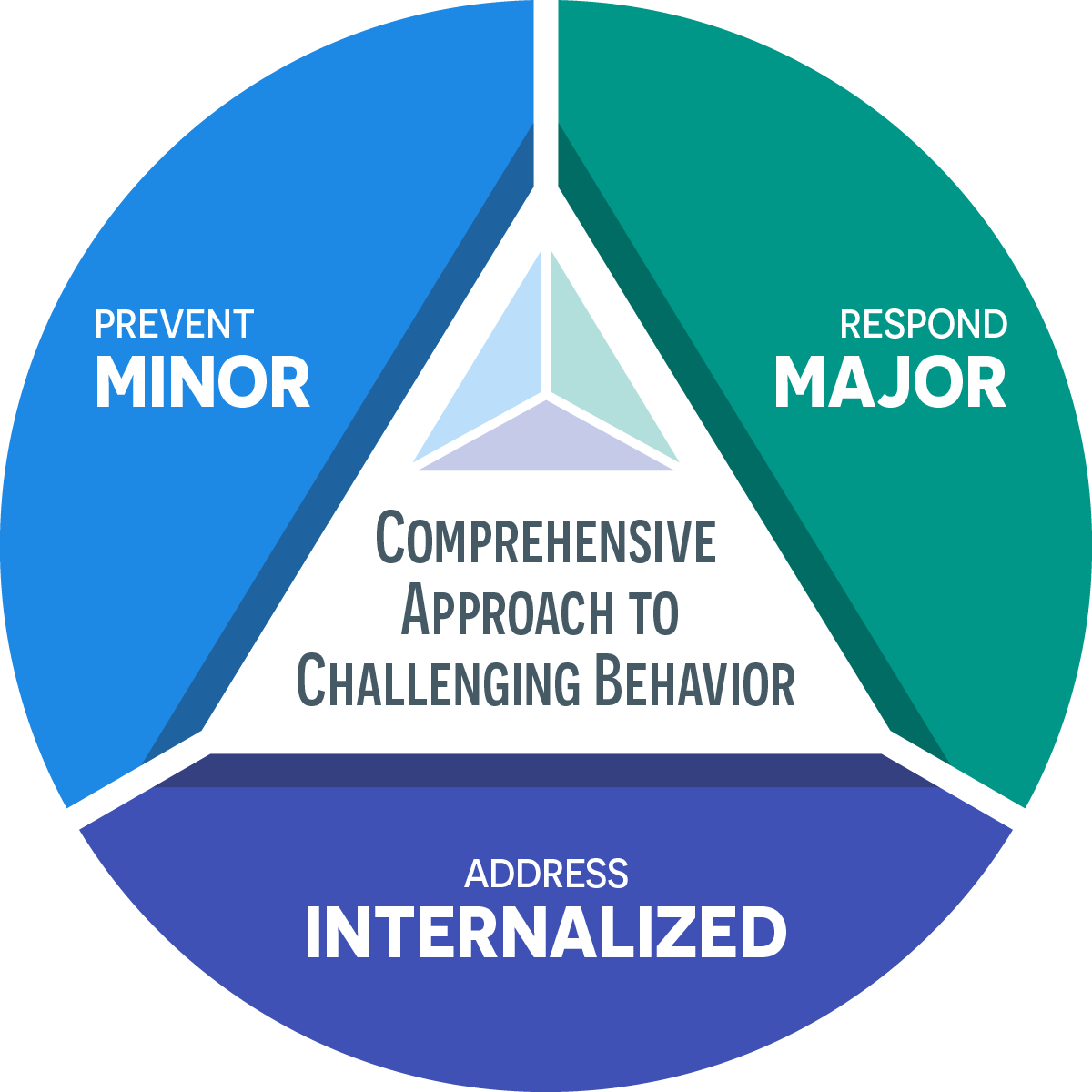
1. Prevent minor challenging behavior
Major incidents like chair throwing or shoving tend to draw the most attention, but they often begin as minor incidents that escalate. A student who feels treated unfairly or a small frustration that goes unaddressed can quickly become a major outburst.
Without a foundation of thoughtful, whole-class practices, schools can unintentionally create the conditions for more frequent and severe behavior incidents. Preventing small incidents also prevents some major incidents.
A. Foster authentic teacher-student relationships with all students
B. Establish clear expectations and consistent routines
C. Add structure to unstructured parts of the day
D. Modify the environment to meet individual student needs
E. Embrace de-escalation to prevent minor challenging behavior from becoming major
2. Respond to major challenging behavior
Major incidents, including physical aggression, property destruction, elopement, or severe emotional outbursts, are frightening for students and staff and disruptive to learning. Schools often respond by sending a student home or quickly returning them to the classroom, but neither addresses what the student needs to prevent future outbursts, and few educators believe these responses meaningfully reduce recurrence.
The goal of an effective response is not to punish, but to return the student to the classroom better equipped than before. Dr. Ross Greene's premise that "kids do well if they can" reframes repeated behavioral struggles as lagging skills, such as flexibility or frustration tolerance, rather than a lack of motivation. Punishment does not build these skills; only targeted teaching, practice, and support can.
2A. Have the right specialists to identify and address behavioral triggers
2B. Ensure the right people with the right skills are in place
2C. Provide a Range Of High-Quality Out Of Gen-Ed Classroom Supports
3. Address internalized behaviors
Not all challenging behavior is loud or violent. Internalized struggles like school phobia, depression, or anxiety often show up as withdrawal rather than aggression, and require different support. Because they're less visible, universal screening tools that assess social-emotional functioning alongside academics help ensure these students are identified.
Grouping students with internalized challenges alongside students who externalize is a common misstep. Proximity to disruptive behavior can deepen anxiety rather than help a student re-engage.
A. Create calm, safe spaces while keeping the focus on learning
B. Provide mental health services for students who need them

Where to start?
Every district is different. In studies of more than 200 districts, however two priorities seems to rise to the top, mitigating severe problematic behavior and building trusting relations between students and teachers. A handful of students can overwhelm a teacher, even a school. Left unchecked, students with explosive outbursts can derail their own learning and that of others. On the other end of the intensity spectrum, when teachers build trusting relationships with their students, especially student who may look different from themselves, engagement, climate and learning all improve.
What Success Looks Like
A large urban school reduced major behavioral incidents from 341 to 66 over 4 years by embracing a prevention mindset.
One district increased counseling services 3 fold without adding staff by focusing their time on a few key activities.
A district learned, to its chagrin, that after 3 years of rolling out its SEL program less than 10% of teachers implemented it per the agreed upon plan, despite significant professional development.
Resources
Playbook: Best Practices for Supporting Challenging Student Behaviors In Elementary and Secondary Schools
Overview: Best Practices for Supporting Challenging Student Behaviors In Elementary and Secondary Schools